Wanneer: jaarlijks, 21 oktober.
Back to the Future Day is on October 21 annually and yes, it does make sense. It’s not just a tribute to the iconic movie series. It’s a reference to the second part of the movie series.
Second part
Back to the Future Day is not just a day commemorating the iconic film series. It is also a direct reference to the second part of the film series. Indeed, 21 October is a completely logical choice for Back to the Future Day. Without giving away too much information, this day is important in this second part. Before answering the question why, let’s take a moment on why Back to the Future was such an iconic movie series.
The Back to the Future series launched in 1985, has etched its place in the annals of cinema as an iconic trilogy. The enduring popularity and cultural significance of these films stem from a multitude of factors, each contributing to their status as a beloved cinematic masterpiece.
Innovative plot and concept
At the heart of the series’ appeal is its groundbreaking plot. “Back to the Future” presented a unique and engaging time-travel narrative that intertwined different periods in a complex yet accessible manner. The concept of a teenager travelling back in time to meet his parents as teenager was fresh and intriguing, offering audiences a captivating blend of science fiction and family drama.
Memorable characters
The characters of Marty McFly and Doc Brown have become cultural icons. Portrayed by Michael J. Fox and Christopher Lloyd respectively, their on-screen chemistry is palpable. Marty’s everyman charm and relatable persona combined with Doc’s eccentric and brilliant character created a dynamic duo that resonated with viewers. Their interactions and adventures are central to the series’ lasting appeal.
Visual and special effects
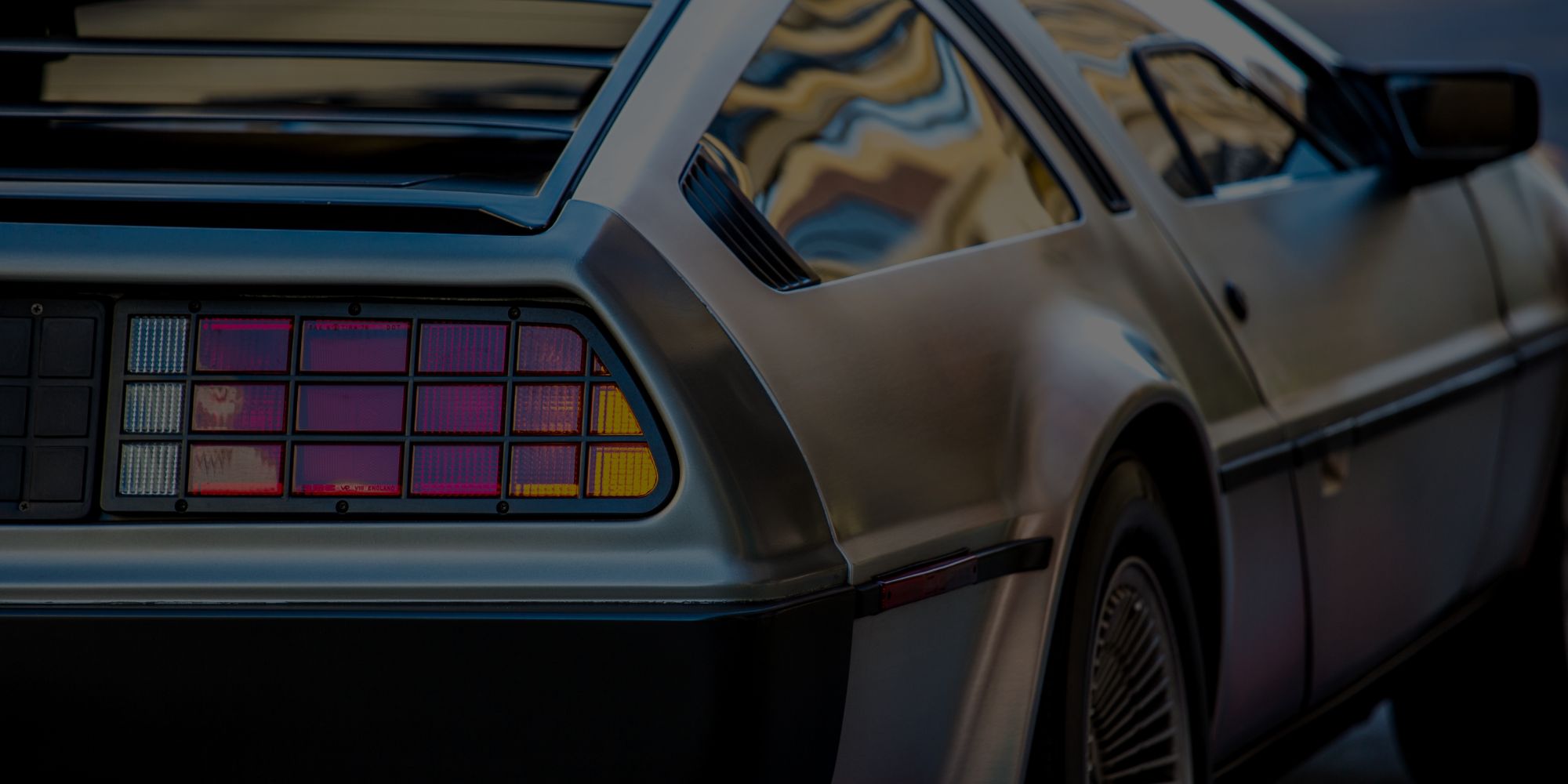
The series was ahead of its time in terms of visual and special effects. The DeLorean time machine, with its futuristic design and imaginative functionality, became a symbol of the series. The depiction of time travel was visually impressive, utilizing state-of-the-art effects that still hold up today, contributing to the film’s timeless quality.
Cultural impact and references
The series has left an indelible mark on popular culture. Iconic phrases like “Great Scott!” and “Where we’re going, we don’t need roads” are instantly recognizable. The films have been referenced and parodied in numerous other media, cementing their place in the cultural lexicon. This widespread recognition and homage across various platforms highlight the series’ far-reaching influence.
Engaging storytelling and humor
One of the key strengths of Back to the Future is its sharp, engaging storytelling. The script is tight and well-paced, blending humour, adventure, and emotional depth. The witty dialogue and humorous situations appeal to both young and adult audiences, ensuring broad appeal. The series’ ability to balance light-hearted fun with serious themes is a testament to its strong writing.
Nostalgia and period accuracy
The films’ meticulous attention to period details added a layer of authenticity and nostalgia. Whether depicting the 1950s, the 1980s, or the imagined 2015, the series captured the essence of each era. This authenticity resonated deeply with viewers who experienced those times firsthand and intrigued younger audiences with its faithful recreation of past decades.
Music and soundtrack
The soundtrack of Back to the Future played a significant role in its popularity. The iconic theme by Alan Silvestri and songs like “The Power of Love” by Huey Lewis and the News perfectly complemented the film’s energy. The music not only enhanced the viewing experience but also anchored the series firmly in the 1980s pop culture landscape.
Universal themes
At its core, Back to the Future explores universal themes such as destiny, family, and the impact of personal choices. These timeless and relatable themes ensure the series’ relevance across generations. The exploration of how individual actions can shape the future resonates with audiences, offering both entertainment and a reflective look at life’s possibilities.
Different parts
The first part of Back to the Future was released in 1985, starring Michael J. Fox, Christopher Lloyd, Lea Thompson, Tom Wilson and Chrispin Glover. The film was directed by Steven Spielberg. The film was awarded an Oscar for best effects and sound effects.
In 1989, Back to the Future II was released. Remarkably, this film did not win an Oscar (although it did receive a nomination for Best Effects and best visual effects). The cast included Michael J. Fox, Christopher Lloyd, Lea Thompson, Elisabeth Shue and Tom Wilson.
The final part of the series, Back to the Future III, was released a year later (1990). The cast had remained largely the same, with the addition of Mary Steenburgen, among others. No Oscar nomination followed for this part.
Back to the Future Day is about the second film in the series and, in particular, an event related to 21 October 2015. So yes, the choice of the day makes perfect sense. Whether it makes sense to continue with the day beyond 2015 should be based on the information below. Only, read the text shown in red carefully.
Spoiler Alert!
If you have never seen the films before (which might be conceivable), then it might not be a good idea to read on. The text below contains spoilers. Clicking on the arrow will take you directly to the text. You can also scroll down.
2015
It made sense for the day to take place in 2015. As such, that was the first time the day took place. Consider for a moment the second part of Back to the Future. Marty McFly goes to the future. To the year…. 2015. He then ends up on 21 October 2015.
In 2015, it was witty to reflect on the film. In subsequent years, was that still the case on October 21? It was. The world as seen in the film did not match a 2015 world and certainly not the succeeding years. That’s why the day continued beyond 2015.
Yet there are elements in here and there that are not as weird as they thought… At least, in 2015 they seemed weird…
Chicago Cubs
Take the Chicago Cubs winning baseball’s World Series. In 1985, such a thing was unthinkable, hence it was included in the film. In 2015, such a thing was still unthinkable, hence it was laughed at. Until suddenly, in 2016, the World Series Baseball was won… by the Chicago Cubs. Even CNN made it clear on 3 November 2016 with a telling title: “Believe it! Chicago Cubs end the curse, win 2016 World Series.“
Weather forecasts
Just checking on your app whether it’s a good time to go running or walking. Because then you’ll know if it might rain. Maybe it’s not as accurate as in Back to the Future part two, but it’s fairly similar to what you see in the film. Doc lets you know that it will be a while before the rain passes, and he bases the information on the data he looks at via his… watch.
Newspaper...
In the USA Today that you see passing by in the film, there is a source of information about what might happen in the future. That future would then be 2015, which for us is the past. No, there has been no female president in power in the United States, although it would have been close. The country did, however, get its first female vice president. Of course, that doesn’t quite count.
Another headline that attracts attention: “Cholesterol may be cancer cure.” Although you can’t quite read the exact text, you have to go off the headline of this “article” here. Could the disease cancer be curable this way? Whether it is entirely accurate is hard to determine, as the original page is now no longer available. However, the archived page from 2012 is available and can be found here. It concerns a drug that was/is used against cholesterol and could be used against cancer. This does not say whether this is a reliable source or not. It only says that this is something that was written about around that time.
As for the rest: mostly things that didn’t pan out, of course. Perhaps the saddest of all is the mention of Queen Diana. Of course, the makers could never have imagined that Diana Spencer or the Princess of Wales would be killed in a tragic accident on 31 August 1997.
Implants in the brain
Hi, Elon Musk! Only this was not in 2015, but years later. The film did mention it. You can read more about it in this article from the BBC.
Nostalgia and the past
Funnily enough, the makers were right on one point. It had to do with nostalgia and the past. Only that’s not weird at all. That’s something that makes sense. In the film, in several scenes, you see a kind of ‘hankering’ for nostalgia and the past. Is that weird? No, because that’s actually of all times. Does this count? Not quite. Besides, the film was made in the 1980s (1989). Logical that a bit of that era image seeped into the film, right? Only where it went wrong: certain technological developments of the time were given too much value. Let’s be honest, what is the value of the fax machine nowadays? In the film, the fax machine was given enormous value.
It was not only the value of technological developments that was sometimes misjudged. So was the “skill. Take hoverboards, for example. Yes, they are out there, but in most cases, they do have wheels underneath. Floating all by yourself is not an option yet. There are options for that, but they don’t compare to the inventions as presented in the film. The models that do exist without wheels require a motor and cannot do what was visible in the film.
Let’s talk about Jaws. People were able to see the movie in cinemas in 1975 and more sequels followed: Jaws 2 (1978), Jaws 3-D (1983) and Jaws: The Revenge (1987). This was the end of the series. Thankfully, it didn’t lead to a series of nineteen movies.
Lights on, lights off
It was somewhat futuristic at some moment in time: voice-controlled lights. Even in 2015, it was an impossibility to do that. After that things went fast and nowadays it’s possible.
In the second part of Back to the Future it wasn’t just a matter of lights on, lights off. According to the movie, it was also possible to use video conferencing options using glasses. Even Google Glass didn’t go that far when launched in 2012. Well, the option could have been developed in the end, if Google decided not to stop developing Google Glass in 2015.
In 2015 we did make conference calls using digital methods. Yes, different from the way we use platforms such as Microsoft Teams, Jitsi or Zoom nowadays. Still, these services offered in 2015 were able to do what was described in the movie. Communication through a screen. This was possible in 2015.
So, how about the usage of voice commands to turn on things in your house? Well, that did happen. Only a few years later. Not exactly in 2015.
Discussions
There are several issues we can discuss. Are they realistic or not or did they come true? One of them is the part about the lights and video conferencing. Well, that has finally become a reality or has somewhat become a reality (Google Glass). This part is about the inventions mentioned in the movie that are debatable. For instance, what about these giantic billboards with holograms? Well, these are a reality in a way. There are huge billboards nowadays and they consist of video images. They have nothing to do with holograms, however. So that didn’t become a reality.
The ‘fake’ USA Today has a mention of the Slamball Playoffs. There is no national US league as well known as playoffs Slamball and similar to baseball. There is just a sport called Slamball now. In case you are not familiar with it: it is a combination of basketball, football, and hockey and you need trampolines. There are professional leagues, though. The sport was invented by Mason Gordon in 1999. Of course, it’s nice that Gordon is named as the creator, but everyone knows he must have been inspired by this film. It couldn’t be more different!
So what about wearing trousers inside out? Believe it or not, this has been a trend. In case you missed it: at the beginning of the 1990s, very briefly. Thanks to the formation of KrissKross to be precise. It was not a lasting trend.
There was much more...
Besides all this, there was much more. Take for instance this article from Screencrush.com for example. That article was written on 19 October 2015, and it’s funny when you consider that some of the things mentioned in that article are therefore already possible by now.
A meaningful day?
Okay, is this a meaningful day Back to the Future Day? It’s a day when you have a good reason to watch at least all three films. Besides, the second film in the series is a good time to reflect. Which predictions came true and which did not?