Phillis Wheatley deed iets wat niet alleen onmogelijk was in haar tijd. Als vrouw publiceerde ze poëzie en dat was niet het enige wat ongewoon was. Ze was een Afro-Amerikaanse vrouw, waardoor het eigenlijk onmogelijk was om in de tijd waarin ze leefde poëzie te publiceren. Toch deed ze het en dit zorgde ervoor dat ze ons een schitterend gedicht over de ochtend heeft nagelaten: A Hymn to the Morning.
Over dit artikel
Dit artikel verscheen eerder op de website van The Ministry of Poetic Affairs. Deze website was actief tussen 2016 en 2018. Daarna was de website actief in 2020 en 2021. Deze website was een initiatief van mij, vandaar dat je dit artikel -na aanpassingen- kunt terugvinden op deze website.
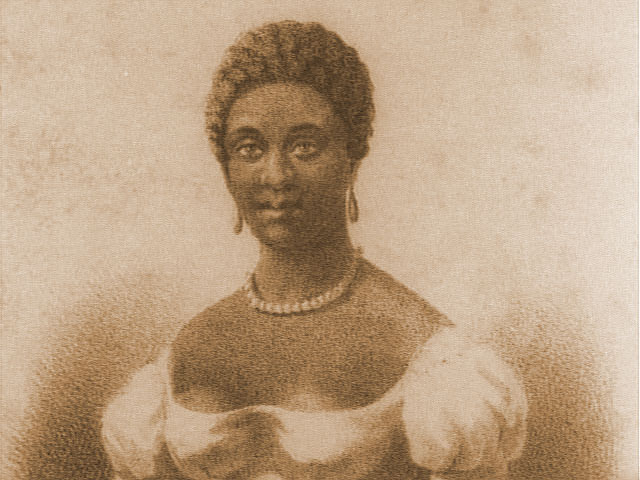
Bron: Wikimedia Commons.
Over Phillis Wheatley
De naam Phillis Wheatley was niet de naam die ze bij haar geboorte kreeg. Ze werd in 1753 geboren in West-Afrika. Ze was pas zeven of acht jaar oud toen ze als slavin werd verkocht. Ze werd naar Noord-Amerika vervoerd, waar de familie Wheatley in Boston haar kocht. De familie leerde haar lezen en schrijven en niet snel daarna realiseerden ze zich dat ze schrijftalent had. Vooral als het op poëzie aankwam. Ze maakte een overzeese reis naar Londen (1773) waar de zoon van haar meester probeerde haar werk gepubliceerd te krijgen. Op dat moment was ze officieel nog steeds tot slaaf gemaakt.
Over het gedicht "A Hymn to the Morning"
ATTEND my lays, ye ever honoured nine,
Assist my labours, and my strains refine;
In the smoothest numbers pour the notes along,
For bright Aurora now demands my song.
Aurora hail and all the thousand die,
Which deck thy progress through the vaulted skies:
The morn awakes, and wide extends her rays,
On ev'ry leaf the gentle zephyr plays;
Harmonious lays the feathered race resume,
Dart the bright eye, and shake the painted plume.
Ye shady groves, your verdant gloom display
To shield your poet from the burning day:
Calliope awake the sacred lyre,
While thy fair sisters fan the pleasing fire:
The pow'rs, the gales, the variegated skies
In all their pleasures in my bosom rise.
See in the east th' illustrious king of day!
His rising radiance drives the shades away--
But Oh! I feel his fervid beams too strong,
And scarce begun, concludes the th' abortive song.
Phillis Wheatley